What Are the Stats I Can Sell My Art
Domestic and International Art Marketplace Sales Statistics
Q: Could you please betoken me in the direction of both nationwide (United States) and worldwide or international sales statistics on the art market? Are there any industry standard market place research reports and/or organizations? The more detail, the better. I'k interested in information well-nigh art equally investment and how much it goes up in value over time. I am also looking for data on buyer demographics; original versus reproduction sales; full domestic and international sales; the numbers of galleries, brokers, and sale houses; and then on.
A: A surprising number of people believe there are answers to questions similar these as they attempt to quantify the art market place and in particular, calculate returns on investment. The brusk respond is that there are no answers. The art market place is vast, diverse and unquantifiable, and despite claims to the contrary, reliable measures of art marketplace transactions don't actually be. While in that location are studies that purport to clarify sure sectors of the trade, the samples those studies are based on are often biased in favor of the results or conclusions that the researchers wish to demonstrate or attain. You'll read more near that beneath. Merely first a few facts about the art world every bit a whole.
To begin with, art is not a article that tin be divers or regulated. Anyone tin can call themselves an artist, anyone can call annihilation that they create "fine art," and anyone tin can get an art dealer or own an fine art gallery. Every bit if that's not enough, anyone can sell art wherever, whenever and under whatever circumstances they please, and price or sell whatever they call "fine art" for hoever much they experience like selling it for, as long as information technology's offered for auction without committing fraud or misrepresentation.
Fine art is existence sold everywhere all the fourth dimension-- on social media, artist websites, gallery websites, websites where artists or galleries pay fees to display their art, fixed-price secondary marketplace and resale websites, classified ad sites, online auction sites, art galleries, art fairs, fine art walks, open up studios, flea markets, estate sales, bricks & mortar auctions, museum sales and rental galleries, "Zero Over $39.95" sales, local country auctions, direct out of artists' homes and studios, street fairs, wine bars, antique collectives, framing stores, on the street, interior design showrooms, coffee shops, condo lobbies, cruise ships, county fairs, and on and on and on. Plain, assembling any kind of meaningful data on overall art marketplace transactions is not possible.
Art sells in all cost ranges. Some is make new; some is hundreds of years old. Some is sold directly to retail buyers past the artists; some might pass through a series of individual sellers, wholesalers, middlemen or galleries on the way to its final destinations. This art includes paintings, sculptures, etchings, lithographs, photographs, serigraphs, digital prints, ceramics, mosaics, wood carvings, ceramics, textiles, weavings, tapestries, watercolors, drawings, mixed media works, video fine art, and so on. Some art sells at auctions and other public sales, but much of it changes hands in private transactions. In all, millions of pieces of fine art are bought, sold, traded or otherwise passed from possessor to owner locally, regionally, nationally and internationally every twelvemonth.
Another reason why overall art sales statistics simply aren't available is due to the proprietary nature of the business. Artists, art galleries, buyers, sellers and collectors generally prefer that sales transactions stay private and often go to swell lengths to continue them that way. Artists don't want other artists knowing how much art they sell or what prices they sell for; galleries don't want other galleries knowing how well or poorly they're doing; collectors don't desire other collectors knowing what they purchase, where they buy it or how much they pay for it. Furthermore, one of the most important rules of the art game is that the more y'all know nigh the market, prices and what'southward selling where, and the less your contest knows, the more money you make, the less coin they make, and the more practiced fine art you get your easily on before they practise.
The good news is that equally the Internet evolves, more than and more price information becomes available online. Millions of international sale sales results from auction houses around the globe are now attainable through websites and databases similar Artprice, Artnet, Blouin Art Sales Index, Invaluable, Liveauctioneers and even eBay. Increasing numbers of artists, dealers and galleries are also posting prices. The caveat hither is that yous better know what yous're doing if you're trying to inquiry or analyze prices or any other kinds of art market place data yous find online, because information tin can often be sketchy, incomplete, inaccurate or just plain false. For case, it'southward not unusual to find a large range of prices for a single artist or type of fine art. Fakes, forgeries and misrepresentations are rampant. What art is priced at and what it ends up selling for can exist substantially different dollar amounts. Verifying information or documentation presented by sellers tin can be difficult to understand, verify or evaluate. And on and on and on.
Now for the biggie. Does art increase in value over time, and if aye, by how much? Those of you who follow the art market may run across occasional studies, charts or indexes that purport to evidence how fine art prices get upwardly over time. Unfortunately, they're almost always based on skewed samples, like for case, simply on sales of artworks that have appeared more once at auction. The main reason certain works of art announced repeatedly at sale is that they tend to become up in value over time, non downwards. So in other words, studies of echo sale sales results that show how fine art increases in value are based mainly on fine art that increases in value-- Not on all the other fine art that either stays the aforementioned or goes down in value. Giddy, isn't it?
Near studies that show how art increases in value are based on similarly biased samples like, for example, exclusively on high-terminate sale sales of art past desirable artists. Over again, with samples similar that, conclusions that art goes up in value are based mainly on art that goes up in value, not on art that doesn't. Other issues with using sale sales as a basis for any types of claims that art increases in value are that sale houses tend to take just fine art they remember will sell well (increment in value) while rejecting all the rest. Likewise, sellers tend to export only fine art they think they can sell at a turn a profit, non at a loss. Art that is likely to sell poorly either does non get consigned in the kickoff place, or gets rejected by the auctions if sellers endeavour to export it. Truth exist told, and in terms of the fine art marketplace as a whole, claims that fine art increases in value are highly overrated. ALWAYS read the fine print to see what those conclusions are based on.
That'south pretty much it, stat-hounds. You'll have better luck trying to count the stars in the sky than collecting overall or full general art market place sales data.
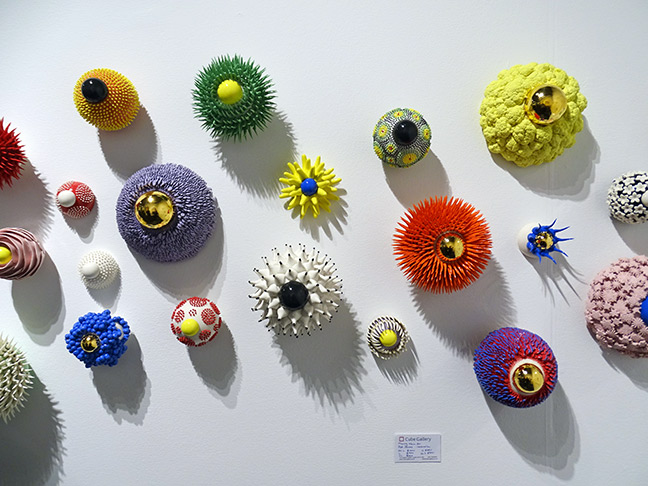
(ceramic art by Myung Nam An)
Source: https://www.artbusiness.com/marketdata.html
0 Response to "What Are the Stats I Can Sell My Art"
Post a Comment